

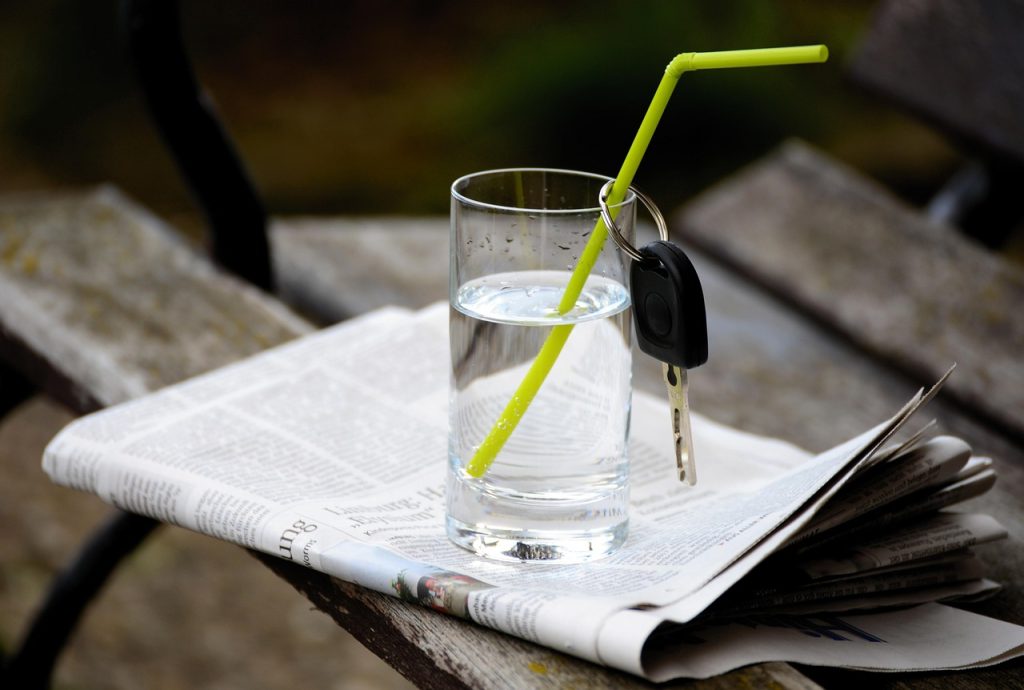
As the holidays draw nearer and gatherings become more routine, December reminds us that it isn’t just a festive month; it’s also National Impaired Driving Prevention Month. With two of the most celebrated holidays in one month, comes too many driving under the influence of alcohol and/or drugs, and too many lives lost. The National Safety Council (https://www.nsc.org) reminds us that, “Drivers with alcohol concentrations at or above 0.08 have remained involved in about one-third of all traffic fatalities in the U.S. That’s about 10,000 lives lost every year.” It’s time we all did our part to ensure everyone makes it home safely this season.
In Vermont, the legal limit for blood-alcohol concentration (BAC) is 0.08 grams per deciliter (g/dL). But “legal limit” does not mean “safe limit.” In fact, the American Driver and Traffic Safety Education Association’s (www.adtsea.org) updated standards on this, that even modest amounts begin to impair critical driving skills: judgment, coordination, reaction time, attention before a person reaches the .08 levels. The Centers for Disease Control (CDC) (www.cdc.gov) reminds people that a “standard drink” in the U.S. whether a 12-oz beer, 5-oz glass of wine, or 1.5-oz shot of spirits, contains roughly the same amount of pure alcohol. What does this mean? For a 160-pound man drinking one standard drink in an hour (That’s 1 of the above), the BAC might rise to roughly 0.04, which we know is enough to impair reaction time and coordination. The CDC suggests that when you add a second drink, or drink on an empty stomach, and that impairment increases, even if you don’t “feel drunk.” At 0.08 BAC, crash risk is about four times higher than sober driving; at 0.15 BAC, risk jumps roughly twelve times higher.
How many drinks are too many? There technically is no universal threshold that is one size fits all, because alcohol’s effect depends on weight, sex, food, metabolism, pace of drinking, and many other factors. The CDC shares a useful rule of thumb: one standard drink per hour gives your body a chance to metabolize it. However, the Cleveland Clinic (www.healthline.com), shared information in an article online entitled, “How Long Does Alcohol Stay in Your Body?,” that if you have two or more drinks over short periods, can easily push you over 0.08 BAC without you realizing how impaired you are. Because of that variability, relying on “how you feel” is dangerously unreliable and leads to unnecessary outcomes each year.
Nationally, data from the National Highway Traffic Safety Administration (www.nhtsa.gov) shares that impaired driving remains a major killer: in 2023 alone, over 12,400 people died in alcohol-impaired driving crashes, that’s one person every 42 minutes. In December, these fatalities climb. Between 2018 and 2022, nearly 4,800 people were killed nationwide in December in alcohol- impaired-driving crashes; in December 2022 alone, 1,062 lost their lives. Looking closer to home, the Vermont Department of Transportation (VTrans) (vttrans.vermont.gov), shares that from 2019–2023, 56% of all fatal vehicle crashes in Vermont involved an impaired driver (alcohol or drug). In 2023, there were forty-two fatalities in Vermont involving an impaired driver. Nationally, about 29% of all traffic deaths involve alcohol-impaired driving each year. Vermont’s impaired-driving results are dramatically higher, a stark reminder that impaired driving isn’t just a personal risk, but a community one.
This month, and during all months, we need to do better. If you intend to drink or use medications that may impair alertness, plan a sober ride home before you leave. Never combine alcohol with cold medicines, antihistamines, or other drugs. Even if legal by prescription or over the counter, mixing substances can profoundly impair driving. Remind your friends and family that impaired driving is a scientific fact, it’s not about self-control or feeling “responsible.” Real self-control and responsibility is never driving impaired, ever.
As this season revels in the joy, travel,and celebrations, the bottom line is this: impaired driving remains a major and avoidable cause of death and heartache. In Vermont, more than half of fatal crashes involve impaired drivers, and nationwide, thousands of lives continue to be lost each December. The safest choice is simple: drive sober, or don’t drive at all. The greatest gift you can give this season is making sure everyone gets home safe
Mary Hoadley
Director of The Wellness Center