

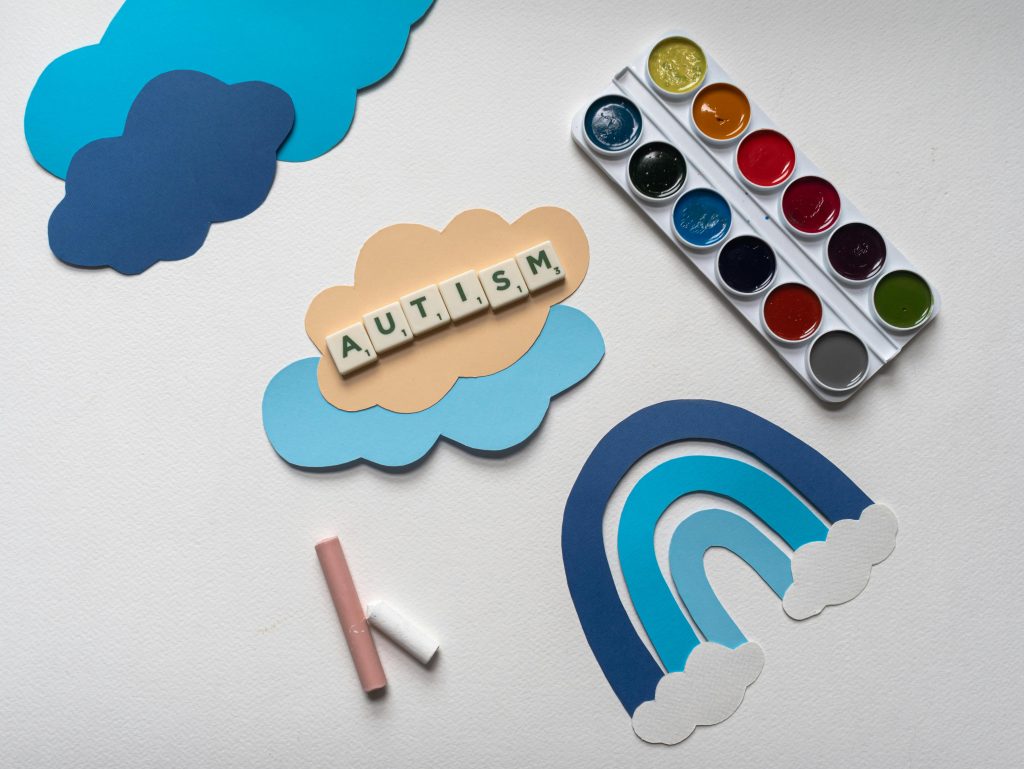
Imagine walking into a room where every light feels too bright, every sound too loud, and every social rule unclear, yet everyone else seems perfectly comfortable. That’s one-way individuals describe living with autism. Today, on World Autism Awareness Day (April 2) and throughout Autism Awareness Month (April), we’re invited to better understand, not just observe what autism is, isn’t, and how we can create a safer world for those who experience things differently. After all, different isn’t bad, it’s just different.
The Centers for Disease Control and Prevention (www.cdc.gov) reports that “Autism spectrum disorder (ASD) is a developmental disability that can cause significant social, communication, and behavioral challenges.” Autism is also a “spectrum condition,” meaning it presents differently in a wide range for every individual. Autism isn’t something that can be honed in on as affecting any one kind of person, it affects people of all races, genders, and socioeconomic backgrounds. Today autism is labelled in early childhood for our kids, however, individuals, especially adults, go undiagnosed for years.
The signs of ASD often appear at age 2 or 3, making diagnosis easier. The National Institute of Mental Health (www.nimh.nih.gov) notes that “some symptoms may appear even earlier, often within the first year of life.” Common signs may include differences in communication or social interaction, repetitive behaviors or focused interests, and sensory sensitivities. Through clinical evaluation, not a single test, a diagnosis can be made, and these signs may or may not be part of an autism diagnosis.
Autism is a “disorder,” or “ condition,” however, autism isn’t “curable.” The Mayo Clinic (www.mayoclinic.org) explains that “there is no cure for autism spectrum disorder, but early treatment can make a big difference in development.” This is ok because autism isn’t something to “fix,” it’s something to understand. People with autism don’t need to change and adapt to those without autism; they need people without autism to learn about how they can adjust to their needs.
Autism awareness matters because understanding leads to inclusion. Inclusion leads to healthier communities. Seclusion leads to unhealthier communities with greater numbers in depression, substance abuse, thoughts/acts of self-harm and other challenges that can be cancelled out by support, awareness, and acceptance.
In Vermont, autism is common in schools, workplaces, and recreational spaces. Vermont parters have worked to make resources closer than people realize to help ensure we keep these spaces safe, healthy, and adaptable. Local Resources:
- Vermont Department of Health – developmental screening and referrals
- Vermont Family Network – family support and advocacy
- NEKCA (Northeast Kingdom Community Action) – local services and early childhood programs
Autism needs advocacy too! People helping to break down the myths and misconceptions that impact human beings who live with their reality. Let’s use AWARE to challenge common misconceptions and empower advocacy:
A – “Adults don’t have autism.” False. Autism is lifelong. After being misunderstood, some adults will finally seek diagnosis, but it’s likely the autism was alongside them the whole time!
W – “Work-life balance isn’t possible with autism.” False. With the right support in place and environments, individuals can thrive in careers and relationships.
A – “Autism is the same for everyone.” False. It’s called a spectrum for a reason. No two experiences are identical.
R – “Reducing certain foods, medications, or environments prevents autism.” False.
The Center for Disease Control/CDC (www.cdc.gov) confirms “there is no known single cause of autism,” and no credible evidence that diet or environmental restriction prevents it.
E – “Everyone is a little autistic.” False. Only a clinical professional can diagnosis autism, with specific criteria. A clinical professional only does.
Spreading awareness and advocacy with local data from My Healthy Vermon/The Vermont Department of Health (www.myhealthyvt.gov) and other state resources, will show an increase in identification of developmental conditions, including autism. This doesn’t mean autism is “spreading,” it’s not contagious and doesn’t have this ability. It does mean we are getting better at recognizing it, and that’s progress! This awareness supports early diagnosis which leads to faster support!
Here in our community, we can make a greater difference by prioritizing the value in education on autism, the importance of supporting early screening, creating inclusive spaces, and listening to lived experiences. You may never understand what a parent of an autistic child is going through, or how your friend with ASD feels in loud crowded spaces, and that’s ok! The goal isn’t for a person without autism to understand, it’s for the person with ASD to feel seen, heard, supported and welcome to belong. The goal isn’t to make everyone the same, the goal is to say, no matter what, no matter how different you are, you still belong. Because being different isn’t bad, it’s simply different. It’s ok to be different.