

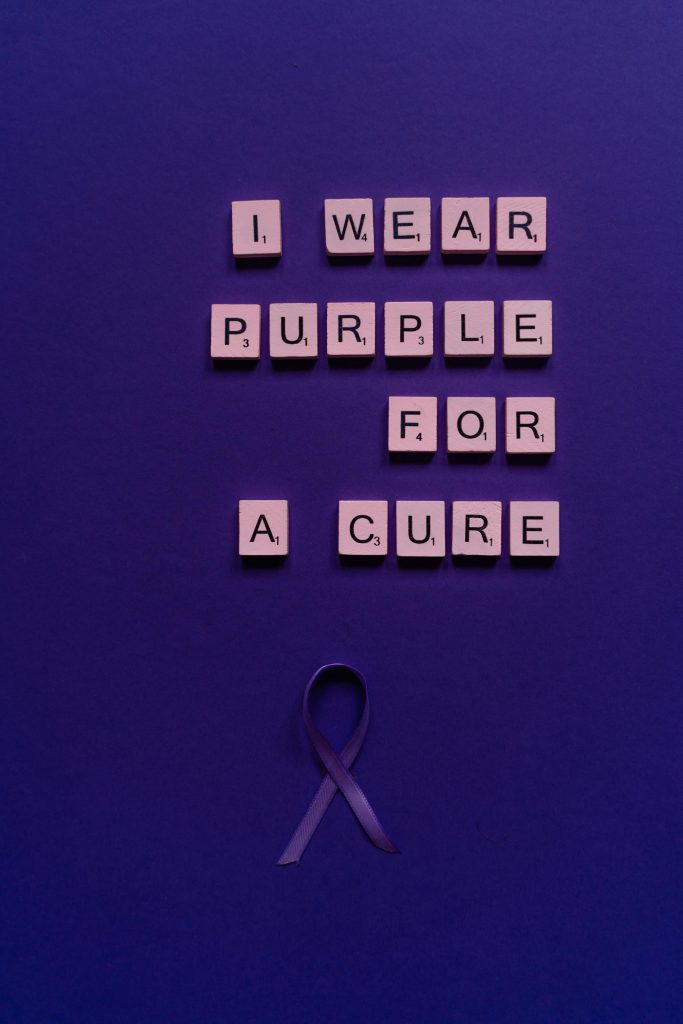
Today, March 26, communities around the world are wearing purple and learning more about epilepsy, a neurological condition that affects about 1 in 100 people. Chances are, you might not have known, and that’s ok. It all changes one word at a time as you learn more about epilepsy and why days like today bring change.
According to their website, PurpleDay.org, Purple Day began in 2008 when a young girl, Cassidy Megan, from Nova Scotia, Canada wanted to help others better understand epilepsy and remind people living with the condition that they are not alone. What started as one person’s idea has grown into an international awareness movement, encouraging people to wear purple, start conversations, and learn more about seizure disorders. Information about the history and mission of Purple Day can be found at purpleday.org.
The Mayo Clinic (www.mayoclinic.org), shares that epilepsy is a neurological disorder in which brain activity becomes abnormal, causing seizures or periods of unusual behavior, sensations, and sometimes loss of awareness. Seizures can look very different from person to person. Some may last only a few seconds and involve staring or brief confusion, while others may include muscle stiffening, shaking, or loss of consciousness. The good news is that many people with epilepsy can manage their condition successfully with medication and medical care and live full, active lives. This means working, going to the gym, having families and yes, driving! It is a total myth that epilepsy means you won’t and can’t have a full-life or ever drive again. In fact, one of the Mayo Clinic’s articles, “To Drive or Not to Drive: The 3-Month Seizure-Free Interval for People With Epilepsy,” Dr. Allan Krumholz, shares the advancements in a life well managed with Epilepsy and how “…nations with particularly strict limitations against driving with epilepsy report especially frequent and severe traffic accidents related to epilepsy. The high incidence of noncompliance dilutes the potential value of longer seizure-free intervals.” This can motivate individuals to find hope in a diagnosis that can be very limiting at its start.
Organizations throughout New England are working to support individuals and families affected by epilepsy. Epilepsy New England provides regional programs and services for Vermonters, offering education, advocacy, and community connections for people navigating life with seizure disorders (epilepsynewengland.org/programs/regional-services/vermont). While they tend to not offer as many programs as we many want to see, NAMIVT (namivt.org) does offer many programs that offer support. In addition the Vermont Department of health has man groups in person and online, found at: www.myhealthyvt.org that can support people and caregivers with chronic conditions, pain management, and other resources to connect Vermonters to resources too.
Why do we need to be aware of epilepsy? Awareness matters because knowledge replaces uncertainty with confidence. The Epilepsy Foundation shares the current data that 3.4 million Americans are living with epilepsy, that’s 1 in 100 people! 150,000 new cases are diagnosed each year. 1 in 26 will develop this in their lifetime and for 1 in three people, there is no effective treatment. This makes epilepsy and the odds of knowing someone or being faced with it in your real circles a reality. Awareness brings confidence and empowerment!
For example, if you ever see someone having a seizure, the most helpful things you can do are simple: stay calm, gently guide the person away from danger, place something soft under their head if possible, and turn them onto their side once the seizure has stopped. It’s important not to restrain them or place anything in their mouth. Staying with the person until they are fully aware again can make a big difference. These are things you learn on these websites! And uninformed person may see other details in a movie or old wives’ tales, that could be harmful. In example, there was a myth that if someone was having a seizure, you should put a spoon in their mouth, so they won’t swallow their tongue, this is not true, and dangerous! Awareness from valid resources helps!
Here in the NEK our strengths come in our desire to build and foster strong, healthy and vibrant communities. Communities are not defined only by shared zip codes or the streets we live on. Communities are built through relationships. They grow when we take time to get to know the people around us and when we show up for one another when it matters most. Most of us know at least 100 people. When you think about your coworkers, neighbors, family members, classmates, and friends, that number quickly grows. If epilepsy affects about 1 in 100 people, then chances are someone in that circle is living with it. The question becomes not just whether we know the statistic, but whether we know each other well enough to offer support, understanding, and kindness.
Communities are not built by proximity alone. They are built when people are willing to share the weight on heavy days. Empower yourself to be that person of knowledge and action. You can join the Purple Day campaign today, in even a small way! Visit https://purpleday.org/join-the-campaign/ and you will see many opportunities for things as big as hosting a fundraiser (plan now for next year), how to contact your local representatives to promote Purple Day and epilepsy awareness and even small actions that make a large impact like, “liking,” and “sharing,” from their Facebook page, and of course learning new facts and keeping up to date on events, awareness and advances. These actions make an impact and they show support!
Let’s join this year, in community, to learn more and raise awareness to support all those who are the 1 in 100.