

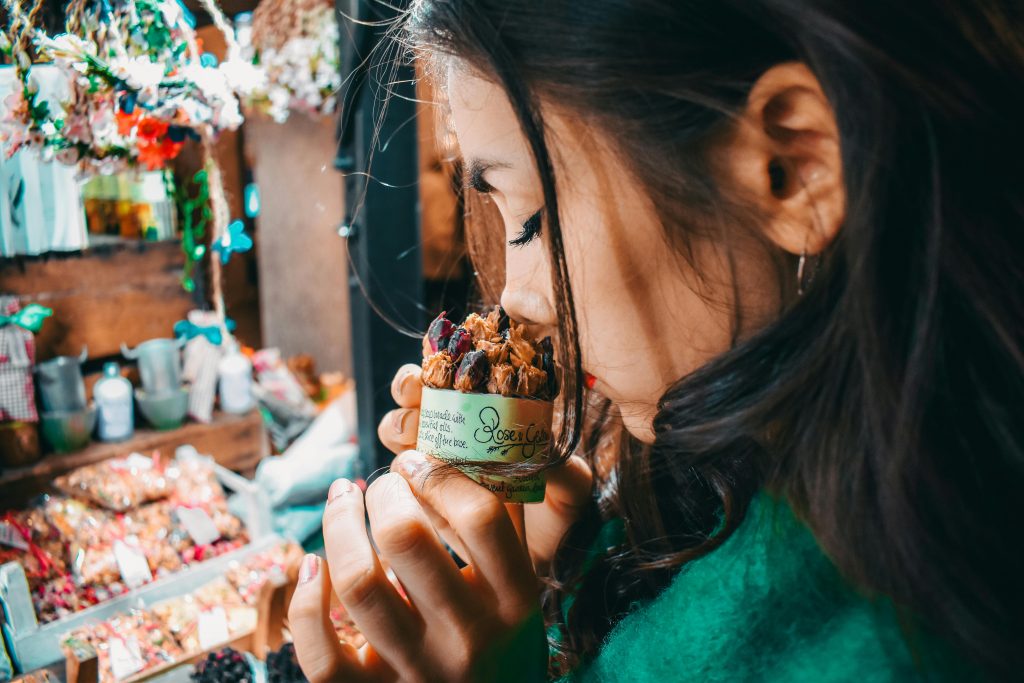
There’s nothing like waking up to the fresh smell of coffee. We find hope in the fresh scent of spring rain and fresh-cut grass. Many of us find nostalgia in the scents and reminders of days past. However, for some, this just isn’t the case, or the possibility. Imagine, no longer having the cues to smell smoke or skunk while walking your pet? No longer smelling lilacs or your favorite flowers? Friday marks Anosmia Awareness Day, the annual effort to shine a light on a condition many take for granted: the loss of the sense of smell.
Anosmia (pronounced an-OHZ-mee-uh) refers to the partial or complete absence of smell, and for those affected, it can be far more than just an inconvenience. This annual awareness day helps educate the public about what anosmia is, how it affects lives, and why it deserves attention and research support. Unfortunately, like many awareness days, unless this is something that impacts you, you may not know about it or consider its scope. However, the more we all learn and share about topics we can help become more aware, empathetic and encourage advocacy.
At its most basic, anosmia is the loss of the ability to detect odors. It can arise from a variety of causes including nasal blockage, head trauma, aging, neurological conditions, medications, infections and even Covid-19. Anosmia may be acquired, meaning it appears later in life due to illness or injury, or congenital, meaning someone is born without a sense of smell. For others this is intermittent where the sense of smell comes and goes or is inconsistent which can impact not only one’s wellbeing but safety too!
How common is this condition? According to the Anosmia Awareness Organization, (www.anosmiaawareness.org) it’s estimating vary depending on how it is measured, but research suggests that between 3.6% and 5.8% of people worldwide live with anosmia, while partial smell loss (hyposmia) affects many more. Some surveys indicate that approximately 1 in 10 people may have some degree of smell loss. In the United States alone, a report suggests that more than 1.6 million Americans may have chronic smell loss for six months or longer following infection with SARS-CoV-2, the virus that causes COVID-19. Chances are, you may even have experiences this yourself.
According to the National Library of Medicine, (https://pubmed.ncbi.nlm.nih.gov), it was the COVID-19 pandemic that brought anosmia into the public eye like never before. During acute infection, between 40% and 60% of people experienced smell or taste loss. While many individuals regained their senses within weeks, a considerable number continue to struggle with long-term anosmia. One follow-up study found that after two years, only about 38% reported full recovery, with many experiencing partial recovery or persistent dysfunction.
Why does anosmia matter? It plays an essential role in everyday safety and enjoyment. The ability to smell warns us of dangers like smoke, gas leaks, or spoiled food. It also contributes to taste, therefore when you can’t smell, it can dull the pleasure of eating and lead to reduced appetite or unintended weight changes. The absence of scent can affect memories, emotional connections, and even social relationships. It can heighten feelings of isolation or contribute to depression in some individuals. When we notice behavioral changes from the pandemic, we forget that it wasn’t just isolation, some are still living effects such as this.
Although complete cures for anosmia don’t exist yet, there is hope. Treatments such as olfactory training, known as repeated, structured exposure to different scents that show promise in helping many people regain some function. Washington University shared an article, (https://oto.wustl.edu/) about their studies with rare cases, medical or surgical interventions may help underlying causes. Ongoing research continues to explore new therapies and a better understanding of how the sense of smell repairs itself. Online theories include many home remedies and people who are desperate to try things to bring back this sense we may take for granted.
Anosmia Awareness Day matters. This day matters because smell loss is often invisible, under-recognized, and misunderstood. We only have five senses and when one is missing, it impacts the rest, it impacts our lives, our relationships, and our wellbeing. Raising awareness encourages early evaluation, supports people living with the condition, and drives research toward effective treatments. For anyone who knows the joy of smelling fresh coffee, blooming flowers, or even the familiar scent of a loved one’s home, this day is a reminder that every sense enriches our lives in meaningful ways. Let’s talk about this day, share what we know, and learn more, it just makes sense to talk scents!